A Key, a Pencil Line and the Bakery You'd Have Walked Past
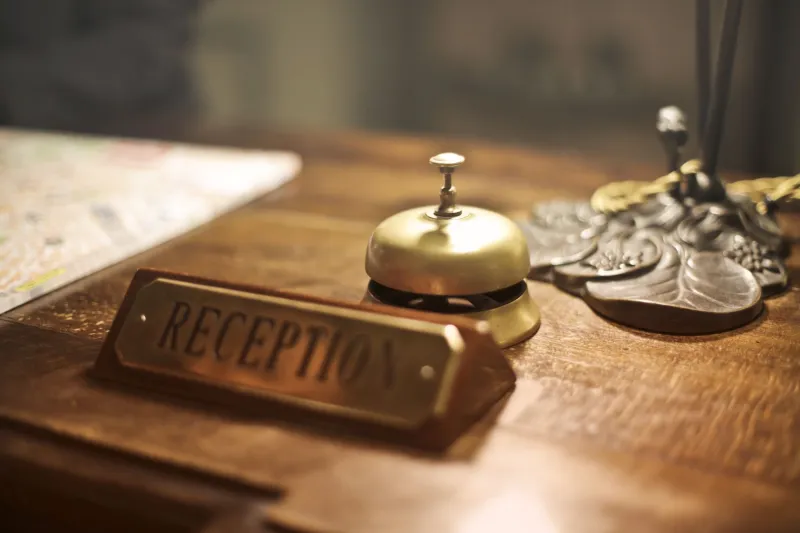
There's a sound a real key makes when it lands on a reception desk. Not a beep, not a click, just a small heavy clunk and a bit of brass sliding on wood. It's the first proper signal that you've arrived somewhere with a front door rather than a lobby, and it usually comes with a second signal: a piece of paper, folded once, with a biro line on it and a few pencil marks that don't quite join up.
We're not going to pretend keycards are a scandal. They're fine. They work. But there's a difference between being processed and being pointed in the right direction, and the difference is usually a receptionist who has decided, in advance, what you ought to see. That's the ritual worth celebrating: the key, the map, and the two minutes of somebody's actual opinion.
What Makes a Map Worth Keeping
Most hotel maps are useless, and they're useless in a very specific way. They're an A4 photocopy of the whole town, badly scaled, with the hotel marked by a cartoon pin and about forty businesses paying for a spot on the page. You can't hold one and walk at the same time, and nothing on it tells you where to go at half four on a wet Tuesday.
A good map is smaller than that. It covers maybe six streets in each direction, it's drawn by hand because someone couldn't be bothered to open the printer, and it has no more than four recommendations on it. Crucially it's marked in pencil, not pen, because pencil means it can be changed and pen means it's a policy document.
What earns a place in pencil? Closing times, mostly. The bakery that shuts at two. The pub kitchen that stops serving at nine on a Sunday. The footpath that floods after rain, the hill that's worse than it looks, the shortcut through the churchyard that's fine in daylight. And the thing that's five minutes further than it needs to be, which is usually the best thing on the map. If a receptionist writes 'worth the extra walk' next to something, go.
It's worth asking for the map even when you think you know the town. The good question isn't 'where's the nearest pub' but 'where would you go at four o'clock on your day off'. The answer to that is rarely in a guidebook.
Six Stays Where the Key Comes With a Pencil
The Salt House, Whitstable
The key here comes on a brass fob stamped with a shell, and the map is drawn on the back of last season's tide table, which turns out to be the useful bit. The pencil marks send you along the sea wall rather than the road, note that the fish shed past the harbour is the one worth queueing at, and warn that the bakery sells out by eleven. You'll check the tide table twice over the weekend and be glad of it.
Rookery Barn, Alnwick
A heavy key with the room number painted on rather than printed, and a receptionist who asks what you're here for before the pen comes out. The map has a cross for the secondhand bookshop and a dotted line for the route that avoids the steep bit into town, which is exactly the sort of thing you only learn by living there. Ours had a small note in the corner: 'not the big car park, the little one behind'. Correct, as it turned out.
The Lantern, Lewes
Here the map arrives folded twice with an extremely poor drawing of a pint glass next to the brewery tap, and the words 'the hill is worse than it looks' underlined. That single line saved us a good twenty minutes of grumbling. There's also a pencil arrow to a deli that does a decent late lunch, which is the kind of information that matters more than any list of attractions.
Ty Newydd, Llandeilo
A wooden key tag and a hand-drawn map that includes the butcher, the footpath up towards the castle, and the fact that the market is on Thursday rather than Wednesday. Small things, but the sort of small things that decide whether a weekend feels charmed or slightly off-key. The pencil here is neat and the handwriting is tiny, which suggests it's been redrawn many times for many guests.
The Old Print Works, Kendal
Two maps, in fact: one for dry weather and one for wet, the second routing you through the covered market and past the museum with a note about the cafe upstairs. It's a small bit of forward planning that makes a difference in November, when the weather can turn a stroll into a tactical retreat. The key is standard-issue and unremarkable, which is fine, because the maps are doing the work.
The Harbourmaster's, Aberaeron
A key on a short length of rope and a map with the tide times written in the corner. The pencil arrow points to the chippy facing the harbour rather than the one on the road, which is exactly the sort of distinction a local makes without thinking and a visitor never would. Sit on the wall, eat chips, watch the water do its thing. Nobody needed an app for that.
The Bit You Remember
Ask for the map when you check in, not when you're halfway out the door, and photograph it before the folds go soft. But don't expect to need the photo. The key ends up in your coat pocket for the whole weekend, and by Sunday the map has been opened and refolded enough times that it's starting to give at the creases. You'll probably keep it. We've got a drawer of them.
That's the whole point, really. A keycard goes back in a box at checkout and is wiped for the next person. A key gets handed over, and a map gets drawn, and for two days you're not a room number, you're someone who's been told where the bakery is. It's a small ritual, and it's the one most people mention when they talk about a stay months later. Not the thread count. The pencil line.