Two Minutes From the Countdown: Six UK Towns Built for a Christmas Lights Night Stay
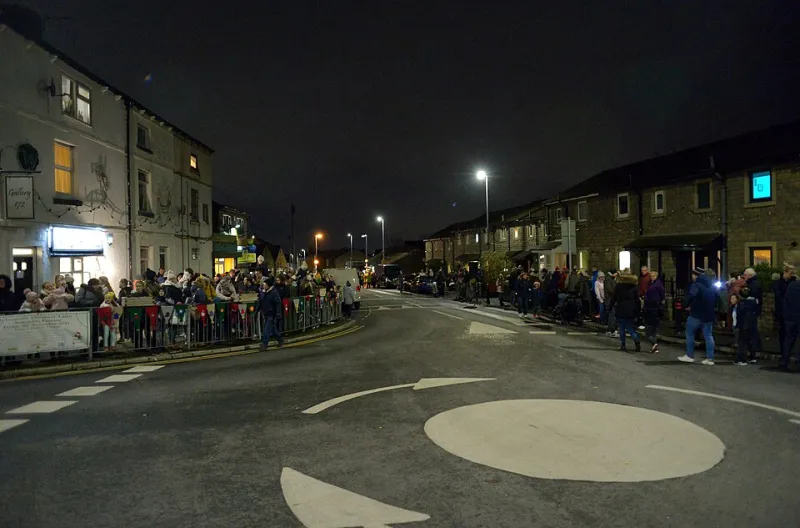
Photo: habiloid , CC BY-SA 2.0, via Wikimedia Commons
There is a particular kind of British evening that begins with a school choir murdering a carol through a PA system and ends with somebody's dad lifting a child onto his shoulders so she can see a switch being flicked. It lasts maybe ninety minutes. It is genuinely lovely. And it is almost always spoiled at the end by a multi-storey car park.
The fix is simple: sleep in the town. Not near it, not on a ring road with a Premier Inn and a retail park — in it, on foot, close enough that the walk home is shorter than the queue for the exit barrier. Switch-on nights are proper events now, with late-opening shops, food stalls and enough crowd to make a car a liability. Treat the whole thing as an event stay and it becomes a weekend rather than a logistics exercise.
Be In Town By Three
Most switch-ons run from late afternoon into early evening — the lights go on somewhere between four and six, then the stalls and the shops carry on for a couple of hours. The mistake people make is arriving at five past four and hunting for a space.
Arrive mid-afternoon instead. Check in, dump the bag, get out for a wander while the town is still itself: the market being packed up, the last of the daylight on the stone, the tree still dark. Then go back to the room, put your better coat on, and walk out at ten to four feeling insufferably smug.
Do check the date directly with the town council or the local paper before you book — switch-ons move around, and a few towns still hold theirs on a Thursday, which is bliss if you can swing it.
Six Towns Worth a Room
Ludlow, Shropshire. A medieval grid of streets that was built for crowds, even if nobody planned it that way. The market square does the heavy lifting; the castle sits above it looking unbothered. Book a room within the old town and ask for one at the back — Ludlow is quiet at eleven, but it is not quiet at seven. Spend the afternoon in the food shops on Broad Street and you'll have no need of a stall for supper.
Beverley, East Yorkshire. The minster, the Saturday Market, and a Georgian grid that looks almost too tidy under lights. Brass bands, generally. A walk out to the Westwood before dark is a good way to burn off the drive, and it makes the return to a lit-up town feel like a small event in itself.
Hexham, Northumberland. The abbey, the park, the steep streets running up from the valley. Hexham's switch-on tends to lean on choirs rather than pop, which suits the setting. Rooms close to the abbey put you above the crowd rather than in it — worth asking about specifically.
Frome, Somerset. Cobbles, independent shops and a high street that has made a religion of not being a chain. The switch-on doubles as late-night shopping, so the whole thing has a bit of a party about it. A converted townhouse room within a few minutes of Catherine Hill is the move.
Kirkcudbright, Dumfries and Galloway. An artists' town on a harbour, and dark enough by late November that the lights actually mean something. Pipe bands, mulled things, a proper small-town crowd. Book early — there isn't much stock and word travels.
Stamford, Lincolnshire. Limestone, almshouses, and streets that photograph better than they have any right to. The switch-on is civilised rather than chaotic, which is exactly the point. A townhouse room just off the main drag gives you the lights without the noise.
What the Room Needs to Do
A switch-on night is a cold-weather event, and the room has three jobs: dry your coat, warm your hands and be quiet at eleven.
Ask about a bath. Ask whether there's a spare blanket in the wardrobe. Ask if the kettle is a kettle or one of those flasks that produces tea-coloured water at sixty degrees. Small things, but on a night when you've been standing in a square for two hours, a hot bath and a working kettle are the difference between charming and grim.
If your room faces the square, you'll get the lights at the window and the soundcheck at half seven. If it faces the back, you'll get sleep. Neither is wrong — just be deliberate about which you're booking.
Eat Before the Count, Not After
Every restaurant within walking distance of the switch-on is fully booked by the time the lights are on. Every single one. Kitchen teams know this and staff up, and it still isn't enough.
Book a table for half five or six, or accept that you're eating at nine. Better still, do what the locals do: buy something from a stall, take a slow route back, and have a proper supper somewhere unfashionable on the edge of town. Or ask the hotel — a good small hotel will hold a table for residents, and it costs nothing to mention it when you book.
The Walk Back Is the Whole Point
This is the argument for the whole idea. At half seven, the lights are on, your hands are cold, and the town is still full. You walk two minutes. You're in. Coat off, kettle on, curtains open.
Meanwhile, a few thousand people are queuing up a ramp in the drizzle, and someone is reversing into a bollard.
Several of these towns are easy by train, too, which means you can arrive without a car at all and treat the whole evening as a car-free mini-break. Beverley, Hexham and Stamford all sit on decent lines; Ludlow is a short hop from the Crewe and Shrewsbury services.
Booking Notes for 2026
Book direct and ring rather than clicking. Ask three questions: which streets close and when, whether the hotel holds dinner tables for residents, and what the latest sensible check-out is the following morning. Book the Sunday night if the switch-on falls on a Saturday — the town is calmer, the rates are kinder, and you get a slow breakfast instead of a scrum.
And bring a thermos. Somebody in the room next door always forgets, and you'll be the hero of the corridor.